
Climate reports have been multiplying for decades. Data on emissions, rising temperatures and record-breaking heat reach us regularly. Yet public discussion of what climate change actually means for food prices, for the labour market, or for the ability to run a business in Wrocław twenty years from now remains surprisingly rare.
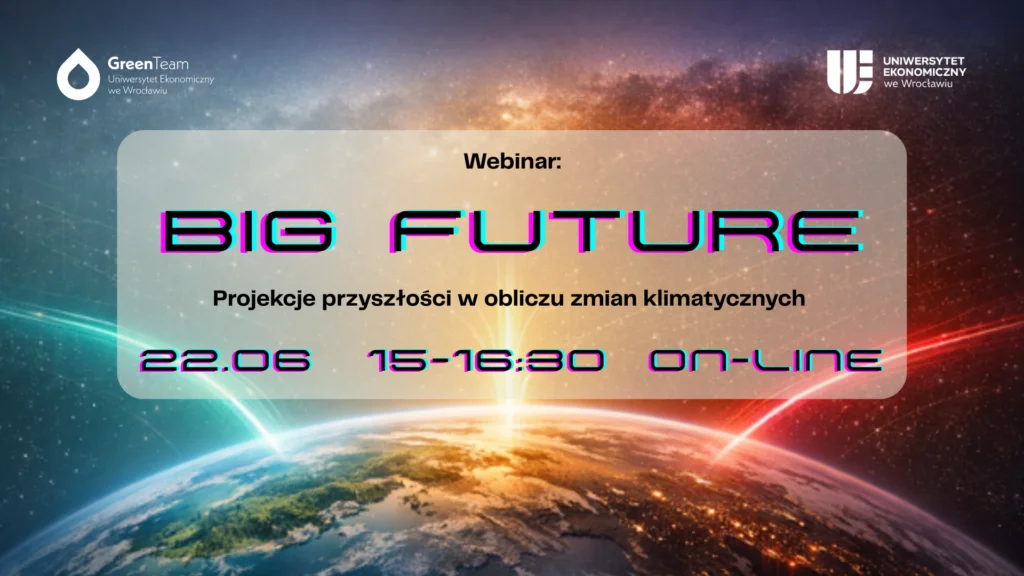
This is precisely the gap addressed by “Big Future”, a project developed by the Green Team, the Centre for Sustainable Development at the Wrocław University of Economics and Business, by Dr hab. Bożena Ryszawska, Professor at WUEB, Dr Anna Baraniecka, Professor at WUEB, and Dr Ewa Brzozowicz. Its inaugural webinar took place on 22 June 2026. During an online meeting, 45 participants from academia, business, non-governmental organizations, and public institutions had the opportunity to become familiar with future scenarios assuming temperature increases of 1.5, 3, and 4 degrees Celsius.
Economics as a key to understanding climate change
The project builds on the Green Team’s long-standing research in green economy, energy transition and environmental economics. It is rooted in a conviction that sets WUEB’s approach apart from many dominant climate narratives: the climate crisis has economic causes and will require economic responses. The historical model of growth based on intensive resource extraction, rising consumption and cheap fossil fuels is not merely a question of emissions. It is also a question of production structures, labour markets, the financing of public services and the resilience of cities.
This places the Green Team’s research directly within the sphere of public policy. The researchers are not asking only about physical processes, but about the consequences that should shape decision-making: how climate change will affect business models, public services, labour markets and the ability of institutions to protect their citizens. These are questions for local governments, ministries, regulators and organisations planning for the long term, not only for laboratories.
Futures studies as a tool for strategic thinking
A central part of the webinar was a presentation by Dr Anna Baraniecka, Professor at WUEB, from the Department of Strategic Management and Logistics, devoted to futures studies as a working method. In this project, futures studies are not treated as deterministic forecasting or as science communication in the popular sense. They are used as a structured method for analysing trends and their interactions, one employed by major strategic organisations around the world to assess risk and plan under conditions of uncertainty. In “Big Future”, this method serves one specific purpose: translating what science tells us about warming pathways into the language of institutional decision-making.
A key concept in this method is convergence: the interaction of multiple processes and trends that together generate new social, technological and economic realities. In Dr Baraniecka’s view, analysing such complex interactions makes it easier to understand possible development pathways and to identify risks more effectively. In the context of the climate crisis, this means that rising temperatures do not act in isolation. They affect labour markets and education, food and energy security, migration patterns and the capacity of institutions to function effectively.
An important theme emerging from the webinar was the gap between the state of scientific knowledge and what still circulates in public debate. The belief that global warming is not happening because cold winters still occur; that current climate change is entirely natural; that higher temperatures will bring mostly benefits; or that scientists are not in agreement about the role of human activity. Each of these claims can be challenged on the basis of available evidence. This is why “Big Future” treats science communication not as an add-on to research, but as an integral part of it: knowledge that does not reach decision-makers and citizens does not shape decisions.
Three scenarios and one unexpected one
These scenarios are not products of imagination alone. They are the result of a systematic process that moves from scientific evidence, through causal analysis, to concrete social and institutional consequences.
The most engaging part of the event was the set of narrative futures projections. Instead of relying on charts or abstract indicators, the team worked with characters: a student, an academic teacher and an entrepreneur connected to Wrocław. Their stories unfolded across three scenarios based on reports by the Intergovernmental Panel on Climate Change (IPCC), the scientific body that synthesises the work of thousands of researchers worldwide and underpins global climate policy, as well as on a method of causal thinking.
A world warmed by more than 1.5°C
is demanding and costly in terms of adaptation, but still relatively stable.
A world warmed by around 3°C
is a reality of chronic crises, more frequent disasters, climate migration and mounting social tensions.
A world warmed by more than 4°C
is one of deep destabilisation across ecological, social and economic systems, where survival becomes the central challenge.
Alongside these three scenarios, the team also presented a fourth one: an unexpected scenario. Based on positive convergence, it assumes that rapid development of environmental technologies, the rebuilding of local communities and new models of governance could together create the conditions for successful adaptation. Not as a utopia, but as a pathway that requires active choices from science, business, public institutions and citizens alike.
Knowledge that can shape policy
Scenarios of this kind do not end in a seminar room. They can serve as a starting point for local adaptation strategies, for planning public services under conditions of growing climate risk, and for assessing the vulnerability of sectors to different warming pathways. This is precisely the space in which scientific knowledge and futures methodology can influence the quality of public decisions. The Green Team, the Centre for Sustainable Development at WUEB, is ready to work with public institutions, local governments and organisations that want to base their planning on scientific knowledge rather than intuition.
What comes next
“Big Future” is a long-term project. Further webinars are planned after the summer and will focus on three areas that are central to social and climate transformation: environmental technologies, community-building, and a civic model of the state. The project is led by Dr hab. Bożena Ryszawska, Professor at WUEB, Director of the Green Team, the Centre for Sustainable Development at WUEB, together with Dr Anna Baraniecka, Professor at WUEB, and Dr Ewa Brzozowicz.
Public institutions, local governments and organisations interested in collaboration on climate scenarios, adaptation planning or long-term strategic thinking are invited to contact the team directly:
Author: Justyna Morawska-Płoskonka
See similar content
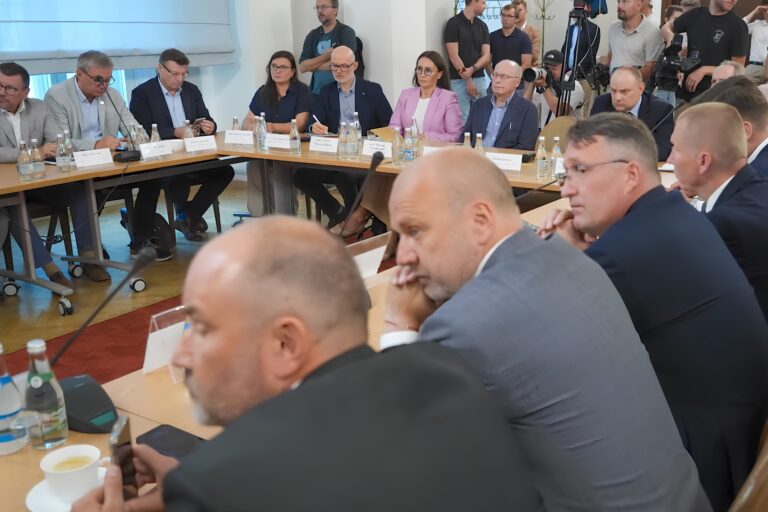
WUEB joins discussions on TEEMA Technology Park in Miękinia
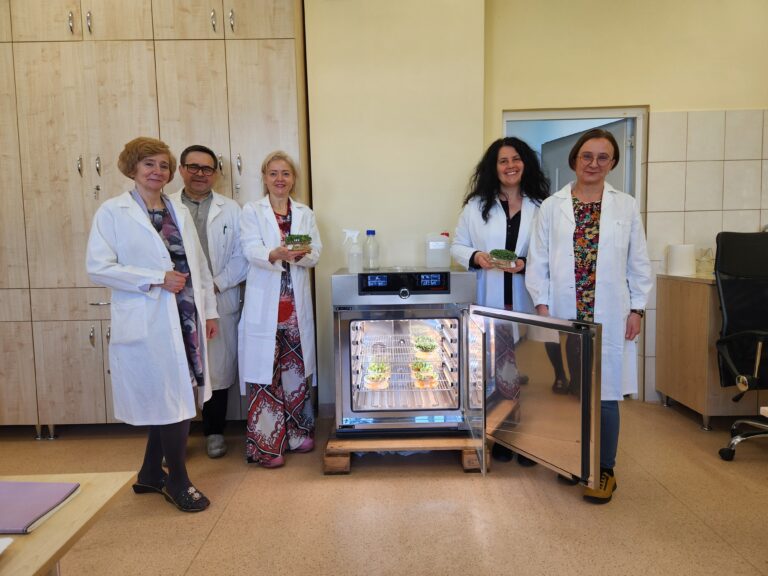
WUEB and GHI discuss food safety standards
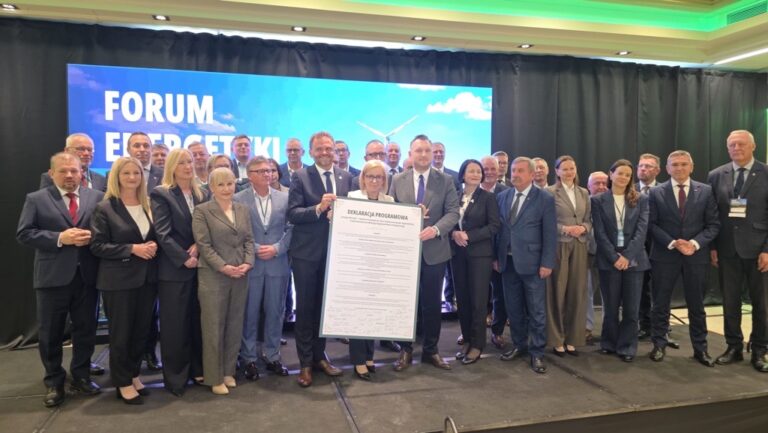
Citizen energy needs economists. WUEB among the signatories of the “Energy for People” declaration
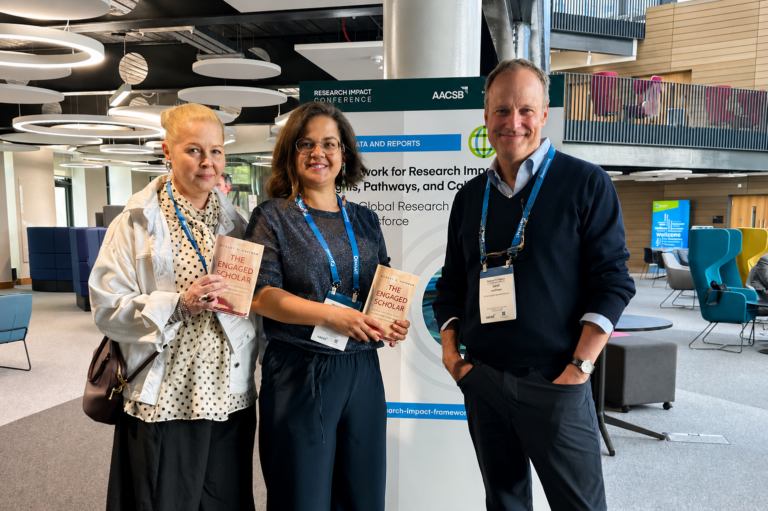
Research impact as a design principle. What the AACSB Research Impact Conference in Dublin teaches us
See also

WUEB Experts Weekly Review: Research, Projects and Academic Successes (28 September–4 October 2026)
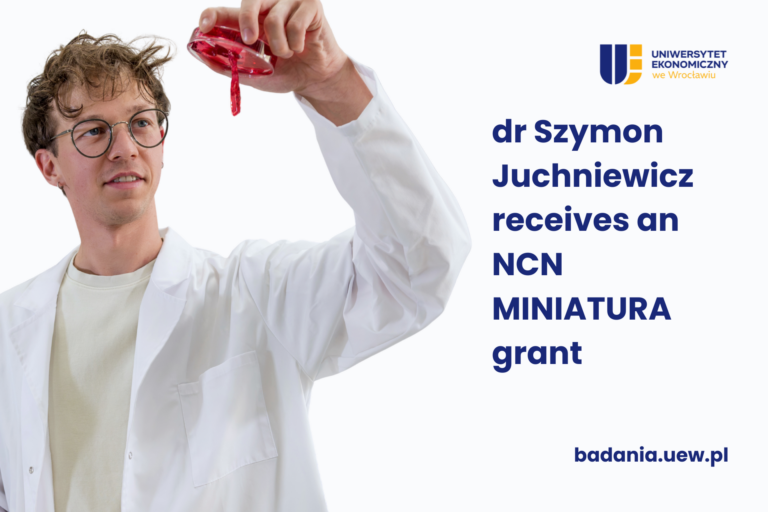
Vitamins C and D in a single plant-based gel: UEW researcher awarded NCN grant
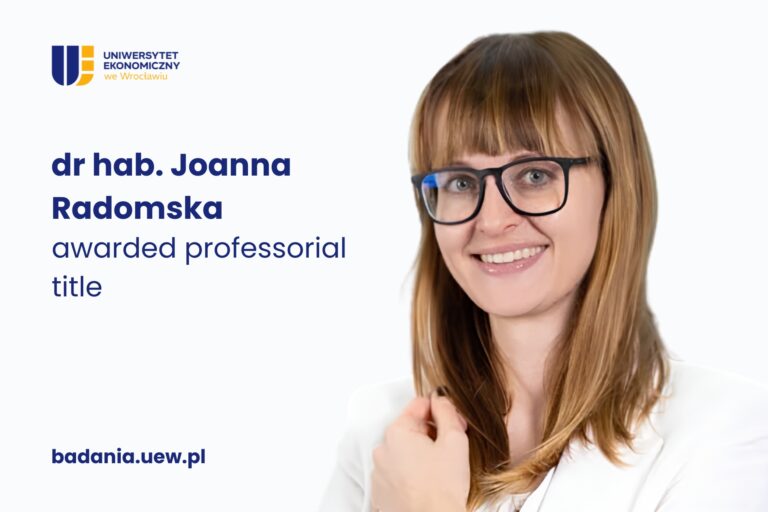
Joanna Radomska of WUEB awarded the title of professor
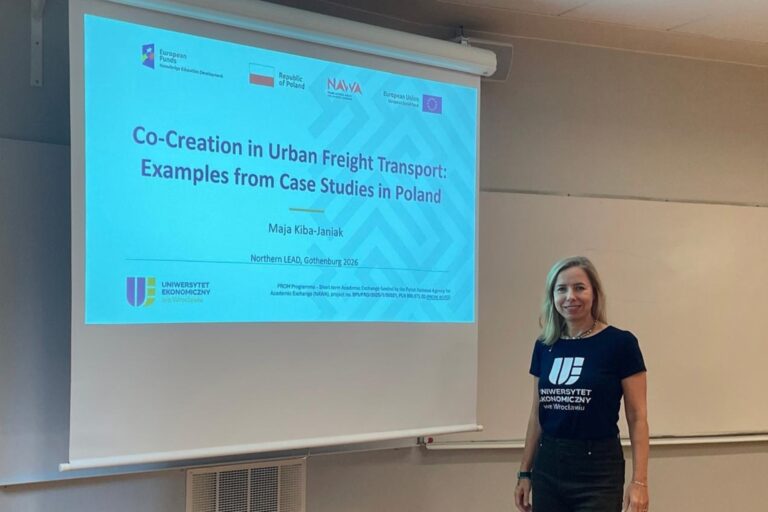
How can solutions for urban freight transport be co-created? Dr hab. inż. Maja Kiba-Janiak’s, Professor of the WUEB research fellowship in Gothenburg
WUEB Experts Weekly Review: Research, Projects and Academic Successes (21–27 September 2026)
Poland’s demographic crisis: Professor Marek Kośny on the economic consequences
What is Bitcoin and How is it Changing Finance? dr Michał Kisiel on the Future of Money