

Edible insects – facts and myths
dr hab. inż. Agnieszka Orkusz
expert of the Wroclaw University of Economics and Business
Have you thought about changing up your classic dishes this year and experimenting with something completely new?
How about locusts instead of carp as not only a unique, but also a sustainable alternative? In the next episode of the series: Non-Fiction, we will look at the facts and myths about insect-based food production.
Is the European Union forcing us to eat insects?
Is information about insects hidden in products so that the consumer is unaware of their presence?

Fact
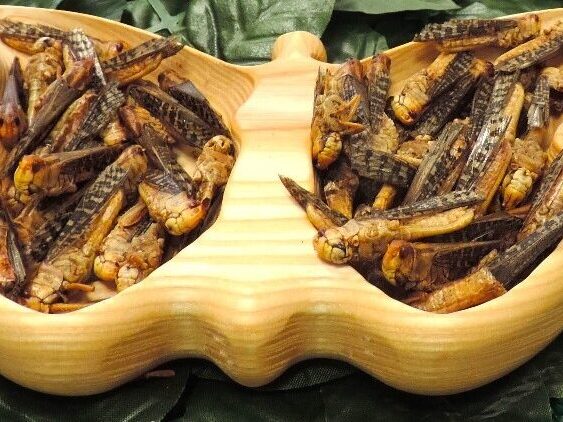
Insect consumption, known as entomophagy, is a concept foreign to Western culture, but is estimated to be an integral part of the diet of at least 2 billion people in Asia, Latin America, Africa, Australia. More than 2,000 species of edible insects are consumed worldwide. Beetles, butterflies, bees, wasps, ants, locusts, crickets, grasshoppers, bugs are the most commonly eaten. Various cooking techniques are used to prepare the insects, such as deep-frying, boiling and baking.
Fact – Insects have been eaten for centuries
Insects have long been used not only in food production
The dried, ground insects known as cactus maggots are used to extract a dark red dye called cochineal. It is widely used in the food industry to color, among other things: sauces, fruit stuffing for cakes, yogurt and toppings. In the cosmetics industry it is used to color, among other things: eye shadows, shampoos.
Fact – Insect production is environmentally friendly
Insects efficiently assimilate nutrients from the feed which means that from the same amount of dry food, insects are able to produce several times more weight than poultry or cattle. They content themselves with any food, even that which is waste from an agricultural point of view – leaves, bran, vegetable and fruit pomace. Insect farming does not require much space, water. Insect farming is associated with significantly lower greenhouse gas emissions compared to livestock farming. Insect droppings can be used as fertilizer. Their production is inexpensive and does not require skilled workers.
Fact – Insects are a source of nutrients
Edible insects are rich in essential nutrients, but their nutritional value varies widely depending on the species, life stage (higher nutritional value – higher protein content, adults compared to developmental stages between larval moults), habitat and diet of the insect. The protein content of edible insects averages 50%, compared to 18% in meat. They are also a source of unsaturated fatty acids, vitamins and minerals.
Fact – Insects as food in Europe
In the current state of the law, under the provisions of Regulation (EU) No. 2015/2283 on novel foods and the Commission’s implementing regulations issued thereunder, raw materials derived from the following insects are permitted as novel foods (either as such or as an ingredient in other foods): Tenebrio molitor (mealworm), Locusta migratoria (migratory locusts), Alphitobius diaperinus (Thrush shiner), Acheta domesticus (house cricket).
Fact – Introducing insects into the diet of Poles is not easy
The introduction of insects into the diet requires a change in mentality, cultural beliefs because insects have traditionally been reviled, viewed as undesirable, mainly parasites and pests, rather than as a source of food. The lack of tradition of eating insects, and therefore the lack of knowledge that insects are a valuable source of nutrients, as well as the lack of knowledge of how to prepare them for consumption so that the dish is tasty affects the reluctance to try them.
However, when the typical insect form is disguised (ground/shredded) and incorporated into other foods (bread, pancake batter, pasta), then it is easier to persuade the consumer to try a dish with an insect in it.
Fact – Edible insects are available in stores
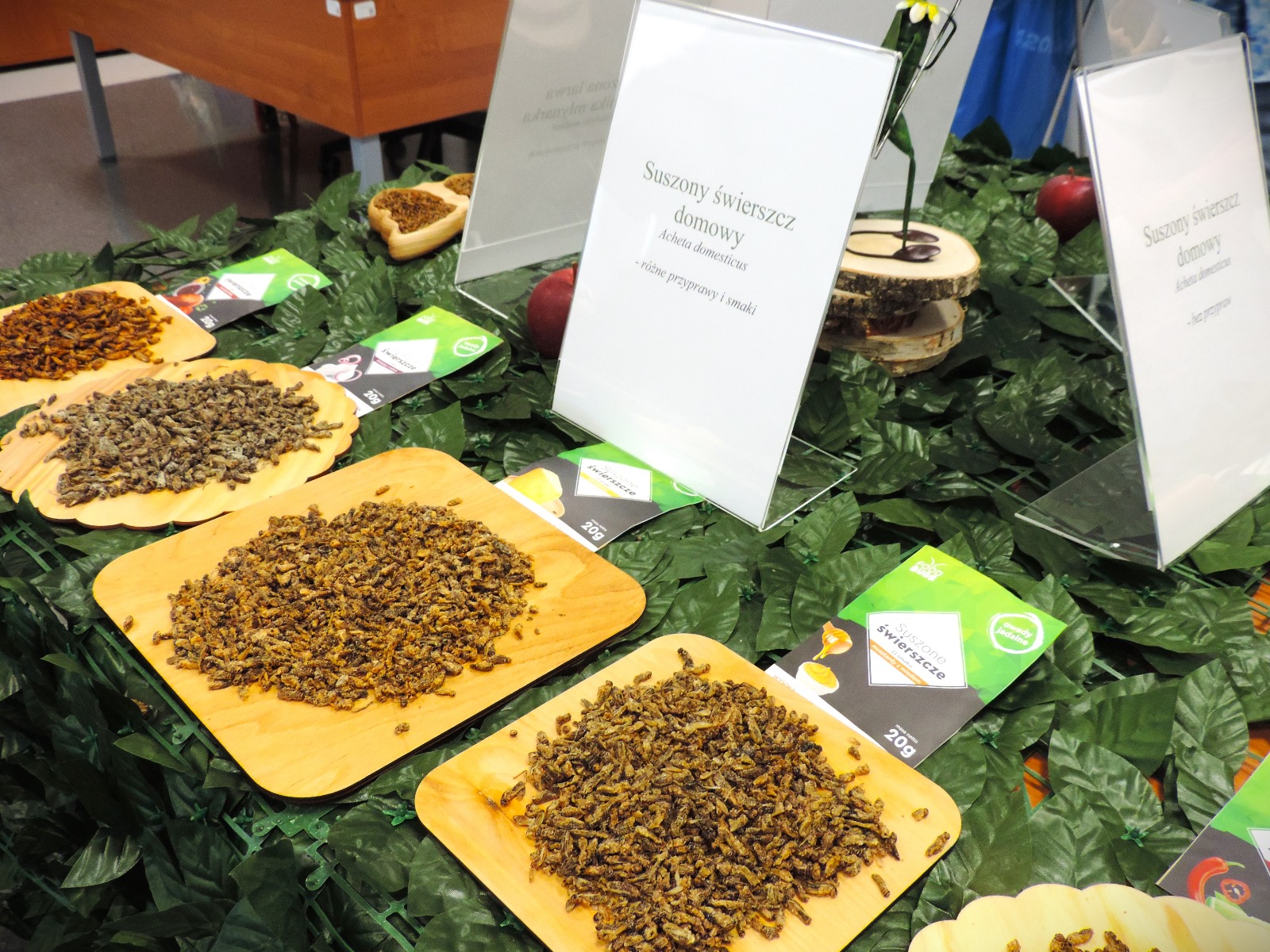
Edible insects (bars, chips, cookies, instant meals, granolas, pasta, flour, whole insects and larvae without additives and in condiments) can be purchased from online stores and selected stationary stores nationwide. In Wroclaw, the insects are available at the Carrefour Plac Dominikański 3 supermarket chain and Carrefour – Borek Shopping Center, al. Gen. Joseph Haller 52.
Myth – European Union forces you to eat insects
The decision to choose a product/food containing insects lies solely with consumers. By reading labels, consumers can be sure what the composition of the product/food is.
Myth – Edible insects are hidden in products so that consumers do not know about them
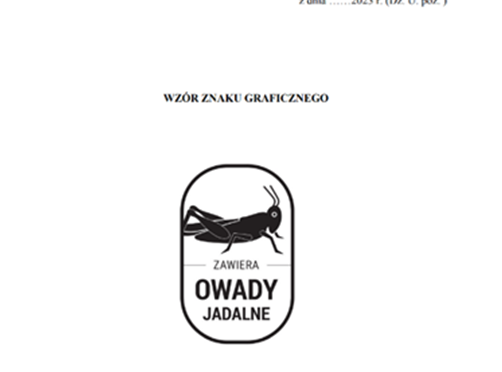
Minister of Agriculture and Rural Development November 27, 2023. has published a draft regulation amending the regulation on the labeling of different types of foodstuffs. According to this draft, food containing edible insects will have to be labeled with the mandatory graphic sign“Contains edible insects.” The labeling is intended to allow consumers to quickly identify products containing edible insects at first glance in the store.
Myth – Edible insects are source of heavy metals, pesticides
The breeding of edible insects is subject to strict controls. It is known what the insects are fed, in what conditions they grow. This excludes the risk of heavy metal accumulation, the presence of pesticides.
Myth – Edible insects cause life-threatening allergies
Like any food, edible insects can cause sensitization. There are as many predispositions and inclinations as there are people, and allergic reactions are an individual issue that can be triggered by almost any substance, food product. Insects belong to the arthropod family, as do crustaceans (such as shrimp). Allergic reactions to shellfish are well known. Particular caution should therefore be taken by those who are allergic to shellfish, in addition to mollusks and mites. Additional allergens may also be found in insects if they were present in their food.
Myth – Chitin contained in insect exoskeletons is toxic
Chitin is a polysaccharide, the main building block of insect carapaces. It is also found in the cell walls of seaweeds and fungi, which are also food sources. Mushrooms are a well-liked product, commonly used in the preparation of holiday dishes (Christmas). Chitin is a dietary fiber that promotes the proper functioning of the body.